Central Grisons and Anterior Rhine
Zervreila
 Sunrise
06:00
20:40
Heavy snow
Sunrise
06:00
20:40
Heavy snow

Widespread danger. Considerable danger across many aspects, elevations, or problems.
Day Risk Profile
Avalanche Problems
 New snow
dry
All day
New snow
dry
All day
 Wet snow
wet
Later
Wet snow
wet
Later
Snowpack & Weather
Snowpack
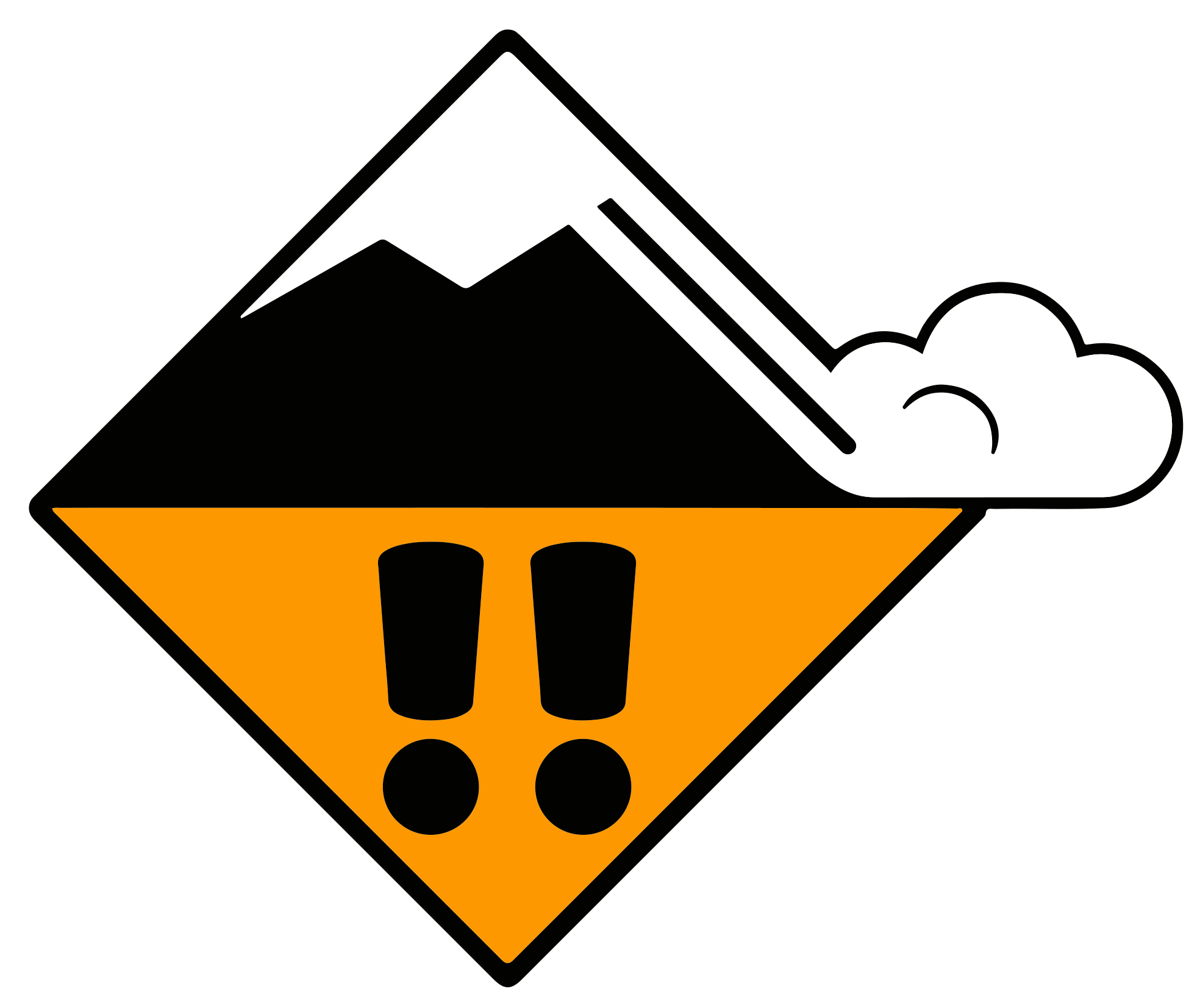
New snow and drifted snow and in some cases near-surface layers in the old snowpack are prone to triggering at high altitudes, especially on steep north-facing slopes. The layers of new and drifted snow are thickest on the Main Alpine Ridge from the Saas Valley to the Bernina region and south of there. In other regions, fresh snowdrift accumulations are mostly small to medium-sized.
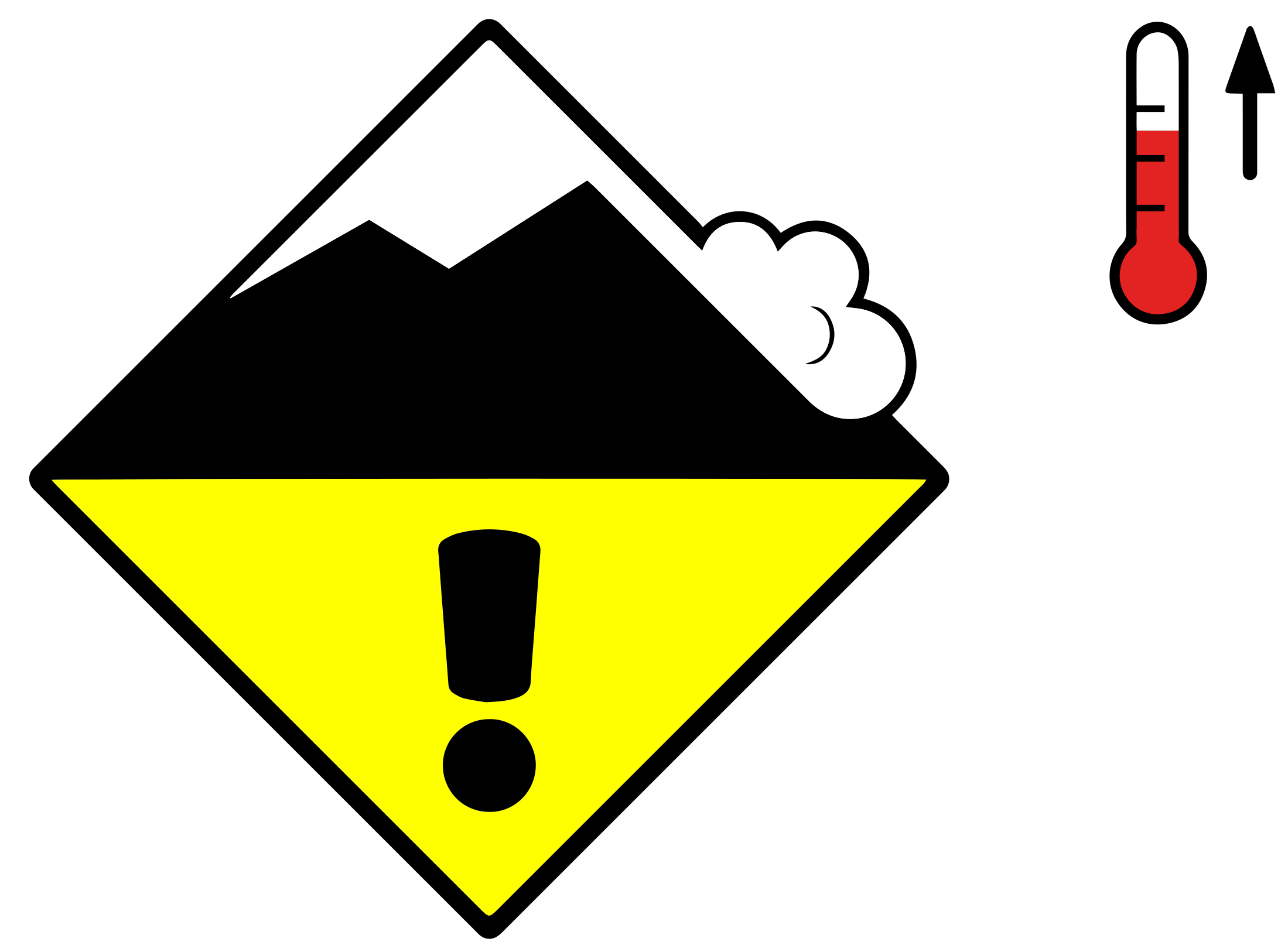
Below the new snow, the old snowpack is moist up to high altitudes. As a consequence of solar radiation, loose snow avalanches are to be expected on very steep slopes, especially in the regions with a lot of fresh snow. Wet snow avalanches, which can entrain the entire snowpack, are possible in isolated cases, especially as the day progresses. This applies particularly to north-facing slopes between 2200 and 2600 m, where the snowpack is becoming wet for the first time.
Weather review for Wednesday
After a mostly cloudy night, there was hardly any sunshine during the day. Snow fell above approximately 2000 to 2400 m, especially on the Main Alpine Ridge and south of there.
Fresh snow
From Tuesday afternoon to Wednesday afternoon above approximately 2600 m:
- Main Alpine Ridge from the Saas Valley to the Bernina region and south of there, from the Trient region to Great St. Bernard region and from the Aletsch to the Susten region: 20 to 40 cm
- Less elsewhere
Over the three days from Sunday to Wednesday afternoon, altitudes above approximately 2800 m thus saw the following snowfall:
- On the Main Alpine Ridge from the Monte Rosa to the Bernina region and south of there: mostly 30 to 50 cm
- In Lower Valais on the border with France, on the rest of the Main Alpine Ridge in Valais, on the Northern Alpine Ridge from Les Diablerets to the Susten region: mostly 15 to 30 cm
- Less elsewhere
Temperature
At midday at 2000 m, between +2 °C in the west and south and +4 °C in the east
Wind
Mostly moderate from southerly directions
Weather forecast to Thursday
Skies will only partially be clear overnight to Thursday. Some precipitation will continue to fall, especially in the south and east. During the day, it will be quite sunny with cumulus clouds and isolated showers and thunderstorms.
Fresh snow
During the night into Thursday, the following amounts of new snow will fall, with a snowfall level of approximately 2200 m:
- On the Main Alpine Ridge from the Rheinwald to the Bernina region: 10 to 20 cm
- Elsewhere a few centimetres. It will remain dry in the west.
Temperature
At midday at 2000 m, around +4 °C
Wind
From the south to southwest, mostly light, at times moderate in the high alpine regions
Outlook to Saturday
The night into Friday will be mostly clear, and the night into Saturday partly clear. During the day on Friday and Saturday, it will be partly sunny on the southern flank of the Alps, and mostly sunny elsewhere. Winds will be mostly light southerlies on both days. The zero-degree level will be around 2800 m.
The danger of dry avalanches will decrease, but only slowly on steep west-, north- and east-facing slopes in regions with a lot of fresh snow at high altitudes. The danger of wet avalanches is once again becoming more closely linked to the time of day. Isolated wet avalanches which entrain the entire snowpack are possible, especially on north-facing slopes between 2200 and 2600 m.
Issued
6 May 15:00 UTC
Valid until
7 May 15:00 UTC
Next update
7 May 15:00 UTC
Adjoining regions
Get avalanche alerts
Enter your email to receive daily bulletin updates for this region.