
Central Grisons and Anterior Rhine
Zervreila
 Sunrise
07:51
19:17
Overcast
Sunrise
07:51
19:17
Overcast

Hard-to-read day. Persistent or gliding-snow problems can mask the real risk.
Day Risk Profile
Avalanche Problems
 Persistent weak layers
dry
All day
Persistent weak layers
dry
All day
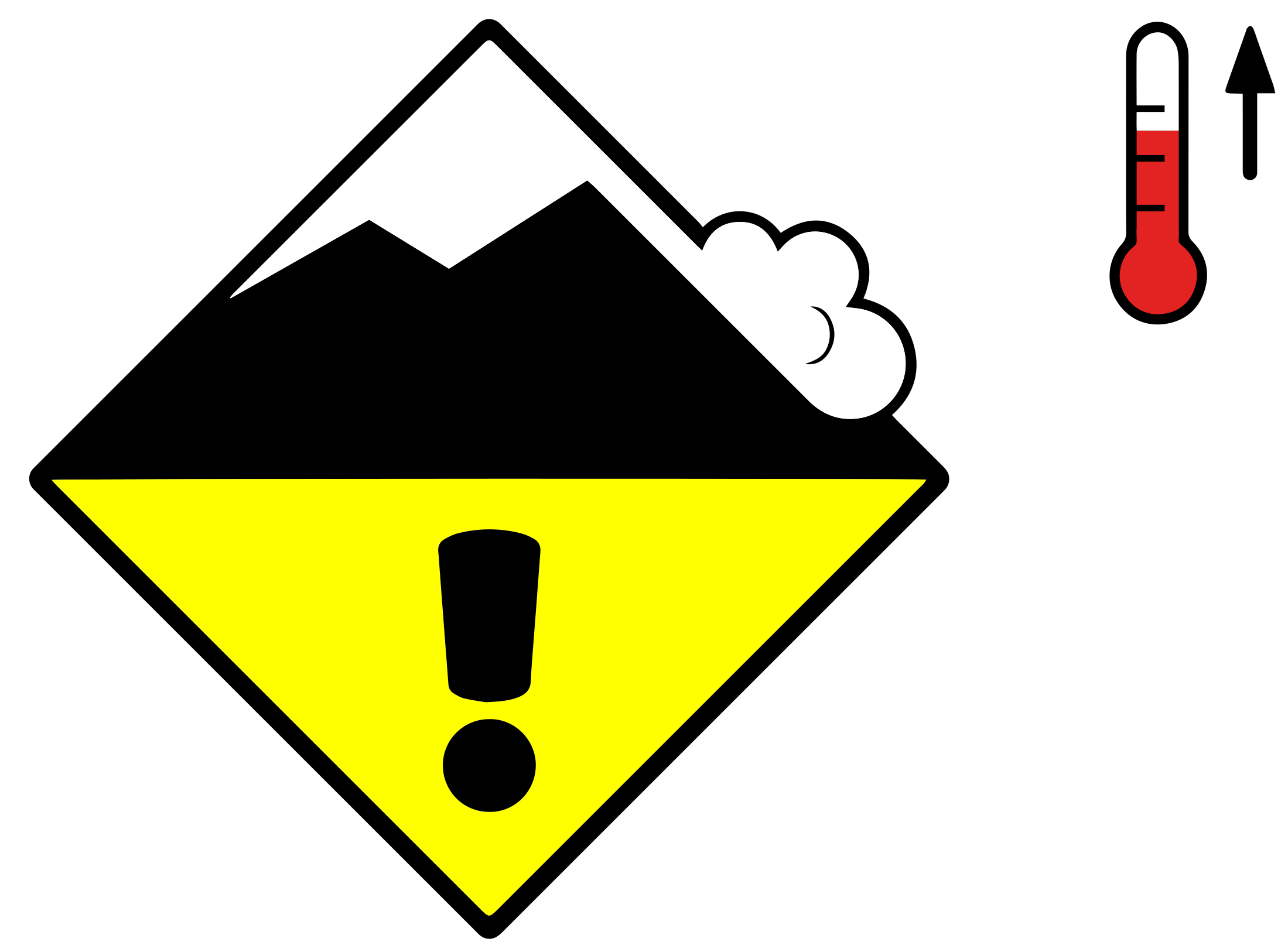 Wet snow
wet
Later
Wet snow
wet
Later
Snowpack & Weather
Snowpack
In the regions north of a line from the Rhône to the Rhine and in the extreme west of Lower Valais, weak layers in the snowpack are mostly thickly covered and are now hardly triggerable by human activity.
In the regions south of a line from the Rhône to the Rhine, the persistent weak layers that have been relevant since the beginning of January are still present. However, the number of avalanche-prone locations has decreased significantly. Danger signs have still been observed in the last few days, particularly in Grisons, and dry avalanches have been triggered in deeper layers of the snowpack.
Weak layers in the lower part of the snowpack are being weakened as they become moistened for the first time. Wet slab avalanches are possible as the day progresses. These can occur naturally but can also be occasionally triggered by winter sports participants, at present mainly on sunny slopes below approximately 2600 m. Isolated gliding avalanches are also possible here.
Weather review for Friday
Despite the Sahara dust, the night was mostly clear and the outgoing longwave radiation was quite good. It was rather sunny during the day. However, visibility was obscured by Sahara dust.
Fresh snow
-
Temperature
At midday at 2000 m, between +7 °C in the north and +3 °C in the south
Wind
Mainly light easterly winds, occasionally moderate in the north
Weather forecast to Saturday
The outgoing longwave radiation during the night will be mostly good. Conditions during the day will be quite sunny. However, there will be sometimes denser high cloud cover and visibility will be obscured by Sahara dust.
Fresh snow
-
Temperature
At midday at 2000 m, around +4 °C in the north and +1 °C in the south
Wind
Mainly light from the south to southeast
Outlook to Monday
The nights will be mostly clear in the north and partly cloudy on the southern flank of the Alps. During the day, it will be mostly sunny at high altitudes on both days. Visibility will be partly obscured by Sahara dust, particularly on Sunday. It will be partly cloudy in the Jura, along the Prealps and in the south. Isolated rain showers are possible, especially in the Jura. The zero-degree level will drop and will be around 2200 m in the north and 2000 m in the south. There will be mostly light south to southeasterly winds.
The danger of dry avalanches will continue to decrease, but only slowly in Grisons due to the weak snowpack structure. The danger of wet and gliding avalanches will increase somewhat during the course of each day. Touring and off-piste descents should be completed in good time.
Issued
7 Mar 07:00 UTC
Valid until
7 Mar 16:00 UTC
Next update
7 Mar 16:00 UTC
Adjoining regions
Get avalanche alerts
Enter your email to receive daily bulletin updates for this region.