Central Grisons and Anterior Rhine
Zervreila
 Sunrise
09:05
17:57
Snow
Sunrise
09:05
17:57
Snow

Hard-to-read day. Persistent or gliding-snow problems can mask the real risk.
Day Risk Profile
Avalanche Problems
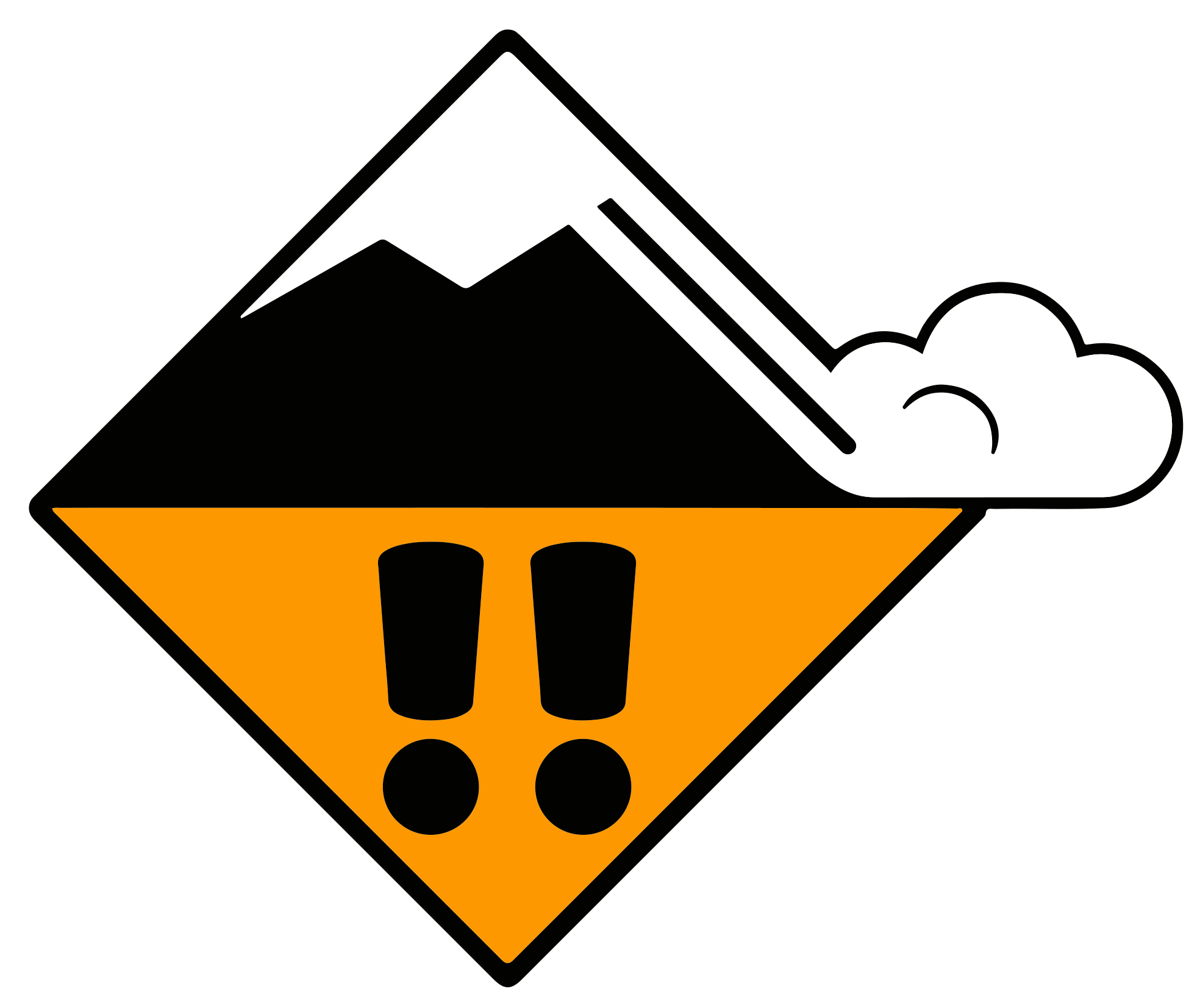 Wind slab + Persistent weak layers
dry
All day
Wind slab + Persistent weak layers
dry
All day
Snowpack & Weather
Snowpack
Especially on wind-protected shady slopes, fresh and drifted snow has been deposited on an old snow surface which is faceted in many places, or on surface hoar. The connection to the old snow surface is therefore poor in many places. Deeper layers of the snowpack are relatively well consolidated in the extreme west of Lower Valais and on the northern flank of the Alps. South of a line from the Rhône to the Rhine, the entire snowpack is often faceted and loose. In these regions, avalanches can start deeper in the snowpack.
Numerous natural avalanches, as well as various avalanches triggered by human activity, some remotely over relatively large distances, are evidence of the current widespread instability of the snowpack. On Sunday, avalanches may be easily triggered by human activity in many areas, especially on the northern flanks of the Alps, in Valais and in northern Grisons.
Weather review for Saturday
There was heavy cloud cover with snowfall down to low altitudes in the north, while conditions were very sunny in the south.
Fresh snow
Between midday on Friday and midday on Saturday, a further 20 to 40 cm of snow fell on the northern Alpine ridge between Les Diablerets and the Aletsch region and in the extreme west of Lower Valais. This means that the following amounts of snow have fallen in total above 1400 m since the start of the precipitation on Wednesday evening:
- northern Alpine ridge from Les Diablerets to the Aletsch region, extreme west of Lower Valais: 70 to 110 cm
- remaining northern flank of the Alps from the Vaud Alps to the Glarus Alps apart from the Prealps, southern Valais between Val Ferret and Mattertal: 40 to 70 cm
- Jura, other regions of Upper Valais and the northern flank of the Alps, Bedretto, northern Grisons, Lower Engadine north of the Inn: 20 to 40 cm
- rest of northern Ticino, central Grisons, Upper Engadine: 10 to 20 cm
- further south: less or dry
Temperature
At midday at 2000 m, around -10°C in the north and -7°C in the south
Wind
Strong westerly to northwesterly, especially in the west and north
Weather forecast to Sunday
Snow will stop falling in the north overnight to Sunday. Conditions will be sunny in Valais and on the southern flank of the Alps during the day. Conditions will also become increasingly sunny in the north over the course of the day.
Fresh snow
From Sunday afternoon to Monday morning above approximately 1200 m:
- northern flank of the Alps from the Bernese Oberland to the Alpstein region: 15 to 30 cm
- remaining northern flank of the Alps, northern Valais, northern Grisons: 10 to 20 cm
- southern Lower Valais, central Grisons, Engadine north of the Inn: 5 to 10 cm
- elsewhere a few centimetres or dry
Temperature
At midday at 2000 m, around -9°C
Wind
- On the southern flank of the Alps and generally in high Alpine regions: moderate to strong from northerly directions, otherwise mainly light
- Subsiding over the course of the day
Outlook to Tuesday
There will be some snowfall in the north overnight to Monday and on Monday morning. On Monday, conditions will be mainly overcast in the north and very sunny in the south. On Tuesday, conditions will often be cloudy in the east and south and very sunny in the west. There will be moderate, occasionally strong, westerly to southwesterly winds on Monday in the Prealps and generally at high altitudes, while winds will mainly be moderate at high altitudes on Tuesday. Temperatures will become milder again and the zero-degree level will rise to around 2600 m in the west and north on Tuesday.
The danger of dry avalanches will decrease in those regions exposed to heavier precipitation. However, especially in those regions to the south of a line from the Rhône to the Rhine, the weak old snowpack means that this decrease will be only very slow. Given the rising temperatures and sunny conditions, moist snow slides and avalanches are to be expected on very steep slopes. There will be scarcely any change in avalanche danger on the southern flank of the Alps.
Issued
11 Jan 06:44 UTC
Valid until
11 Jan 16:00 UTC
Next update
11 Jan 16:00 UTC
Adjoining regions
Get avalanche alerts
Enter your email to receive daily bulletin updates for this region.