
Central Grisons and Anterior Rhine
Zervreila
 Sunrise
06:15
20:27
Overcast
Sunrise
06:15
20:27
Overcast

Manageable day. Moderate to considerable danger — read the terrain carefully.
Day Risk Profile
Avalanche Problems
 No distinct problem
dry
All day
No distinct problem
dry
All day
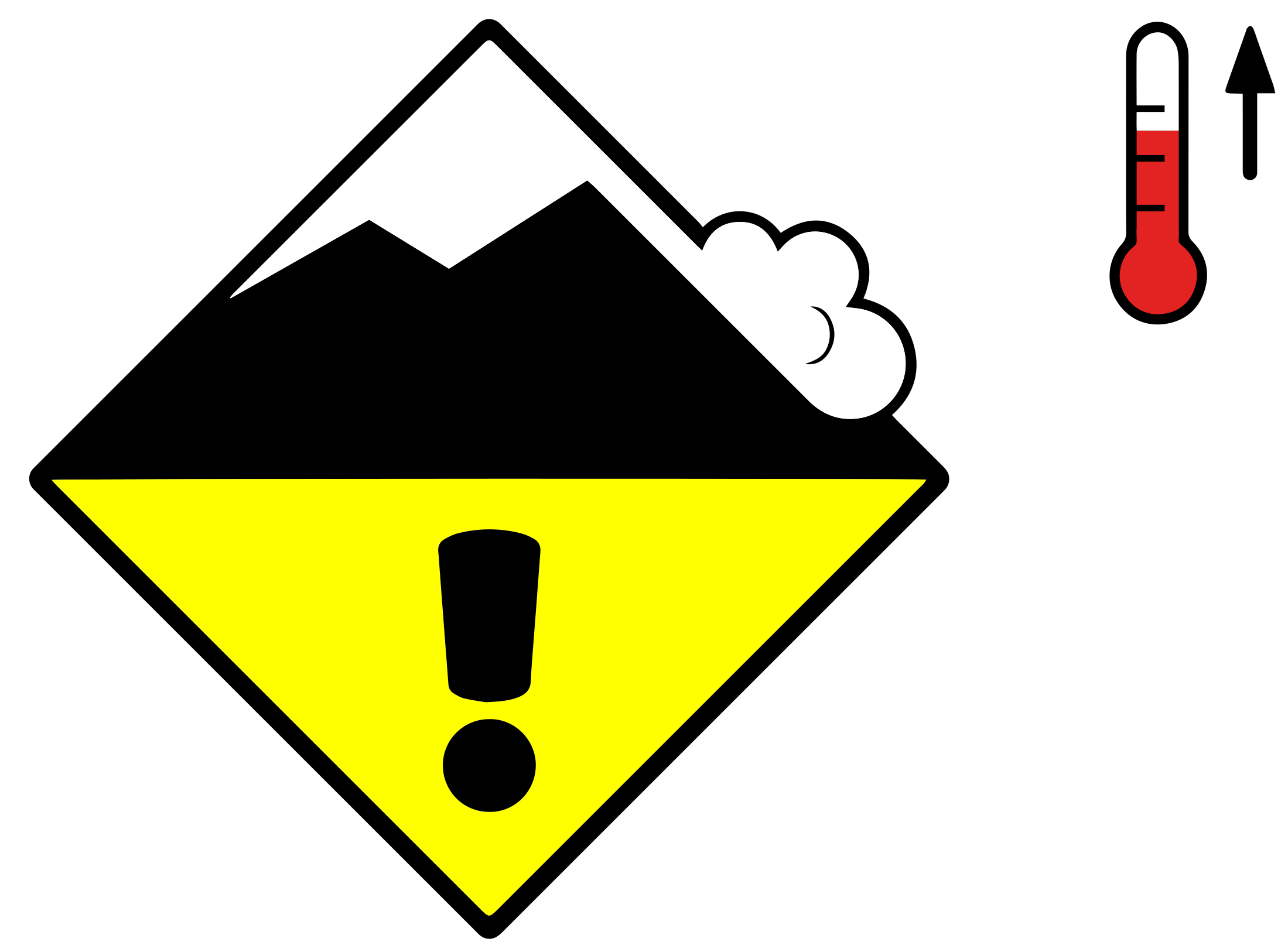 Wet snow
wet
Later
Wet snow
wet
Later
Snowpack & Weather
Snowpack
During the mostly clear night into Monday, the surface of the snowpack will freeze above approximately 2000 m once again to become capable of bearing loads. Sunshine will cause it to soften during the course of the day.
Moisture penetration into the snowpack is well advanced. The most precarious areas are slopes where weak layers in the old snowpack are becoming wet for the first time. At present, this mainly affects north-facing slopes between approximately 2200 and 2500 m, and east- and west-facing slopes between approximately 2500 and 2800 m. On south-facing slopes, moisture penetration into the snowpack extends as far as the high alpine regions. In Grisons, the weak layers in the old snowpack are the least deeply buried, which means that wet slab avalanches can also occasionally be triggered by human activity.
In areas higher up, where the snowpack is still dry, weak layers in the old snowpack are still present, but are unlikely to be triggered anymore.
In general, no further avalanches triggered by human activity have been reported in the last seven days.
Weather review for Sunday
After a mostly clear night, it was mostly sunny and mild during the day.
Fresh snow
-
Temperature
At midday at 2000 m, between +10 °C in the west and south and +7 °C in the east
Wind
Light to moderate from northerly directions
Weather forecast to Monday
Sunday night into Monday will be mostly clear. During the day, it will be mostly sunny with some cumulus clouds in the afternoon.
Fresh snow
-
Temperature
At midday at 2000 m around +8 °C
Wind
Mostly light from westerly directions
Outlook to Wednesday
The nights into Tuesday and Wednesday will be mostly heavily overcast and for this reason outgoing longwave radiation will be low. In the south, it will be overcast during the day with precipitation, especially on Tuesday. The snowfall level will drop from 2800 m to 2400 m. On Wednesday, there will be only a small amount of precipitation. In the north, it will be heavily cloudy on Tuesday with showers and thunderstorms. On Wednesday, it will be partly sunny in the afternoon with showers. The snowfall level will be around 2200 to 2400 m. The wind will be mostly light to moderate from westerly directions. In total, 10 to 20 cm of snow will fall in the high alpine regions over both days. The danger of dry avalanches may increase slightly in the high alpine regions. Where there is reduced outgoing longwave radiation during the night and with rain, the danger of wet avalanches will increase even in the early morning.
Issued
26 Apr 15:00 UTC
Valid until
27 Apr 15:00 UTC
Next update
27 Apr 15:00 UTC
Adjoining regions
Get avalanche alerts
Enter your email to receive daily bulletin updates for this region.