Central Grisons and Anterior Rhine
Zervreila
 Sunrise
08:22
18:52
Light snow
Sunrise
08:22
18:52
Light snow

Dangerous conditions. High to very high danger — backcountry travel is not recommended.
Day Risk Profile
Avalanche Problems
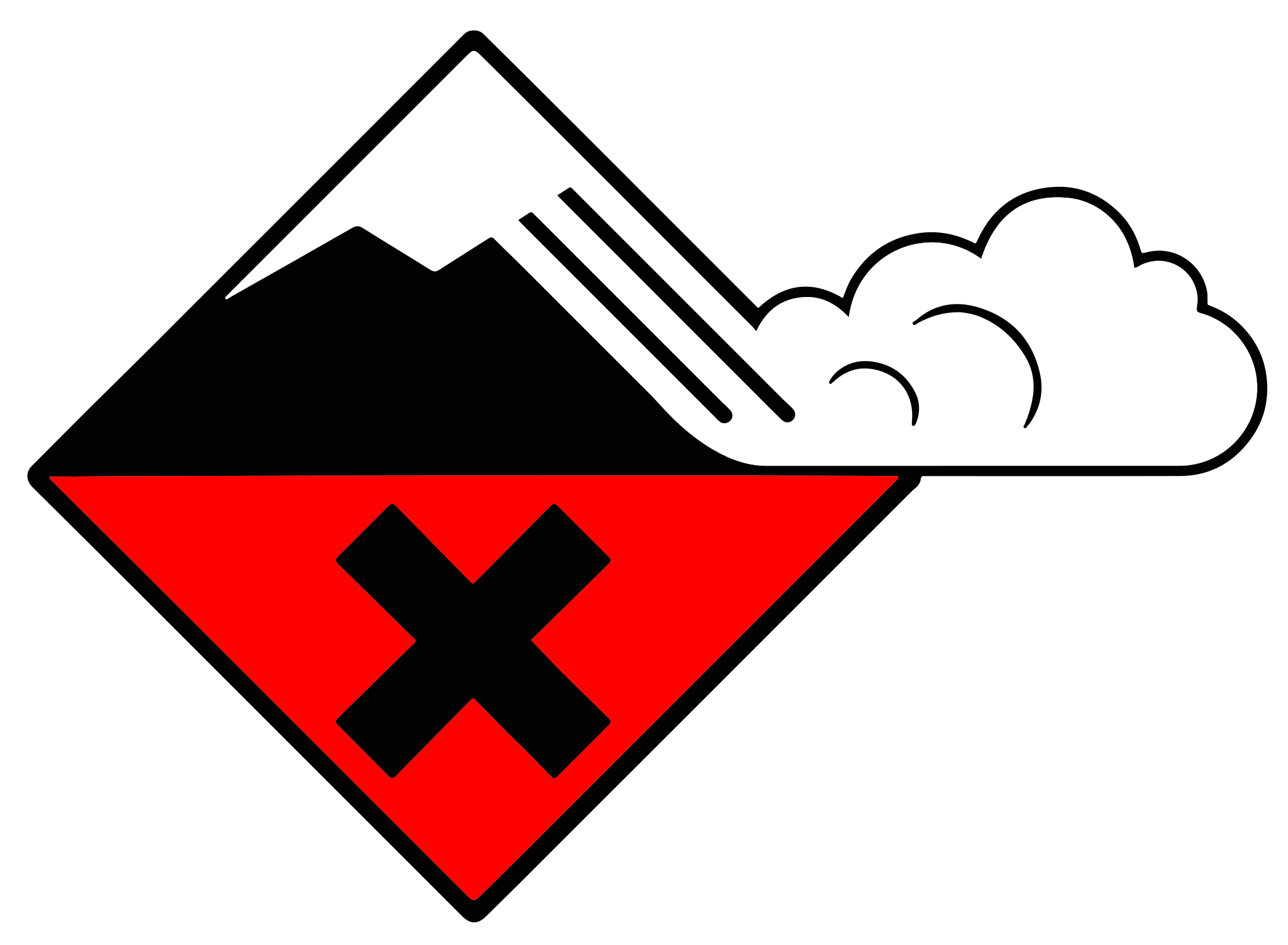 New snow + Persistent weak layers
dry
All day
New snow + Persistent weak layers
dry
All day
Snowpack & Weather
Snowpack
Persistent, heavy snowfall and strong northwesterly winds resulted in the formation of further extensive snowdrift accumulations on Tuesday. This week’s sometimes thick layers of fresh and drifted snow are very prone to triggering. Many large and very large naturally triggered avalanches have occurred in the last few days. There have also been some isolated extremely large avalanches. Natural avalanche activity will decrease as the snowfall subsides, although isolated naturally triggered avalanches will still be possible overnight to Wednesday. This is particularly the case on the northern Alpine ridge, in Valais, in the Gotthard region, in northern Ticino, in northern Grisons and in the Lower Engadine north of the Inn.
The fresh and drifted snow layers in southern Valais, northern Ticino and Grisons are less thick than further north and are lying on an unstable old snowpack with pronounced weak layers. Dangerously large avalanches can easily be triggered by human activity, even over relatively large distances.
Weather review for Tuesday
There was heavy cloud cover and widespread snowfall down to low altitudes. In Valais and on the northern Alpine ridge, snowfall was very heavy at times with more falling than expected in some regions. In the northwest, the snowfall level rose to around 1500 m over the course of the day. Conditions were very sunny in the far south.
Fresh snow
From Monday afternoon to Tuesday afternoon above approximately 1800 m:
- western Lower Valais, northern Valais from Conthey-Fully to the Aletsch region, central and eastern parts of the northern flank of the Alps excluding the Prealps, Alpstein and Liechtenstein regions: 60 to 80 cm
- rest of the northern flank of the Alps, northern and central Grisons, Lower Engadine north of the Inn, rest of central Valais: 40 to 60 cm;
- elsewhere 20 to 40 cm; a few centimetres in the far south
Total snowfall from Sunday evening to Tuesday afternoon above around 1800 m:
- northern Alpine ridge from the Trient region to the Aletsch region and from the central Swiss Alps to the Glarus Alps: 90 to 140 cm
- rest of Valais, rest of northern flank of the Alps excluding the Prealps, also northern Ticino, northern and central Grisons, Lower Engadine north of the Inn: 50 to 90 cm, less elsewhere
- only a few centimetres in the far south
Temperature
At midday at 2000 m in the northwest around -2 °C, otherwise around -6 °C
Wind
Northwesterly: mainly strong in the Alps, storm-force in the Jura, moderate in Ticino
Weather forecast to Wednesday
Snowfall will come to an end overnight to Wednesday and there will be a short break in the precipitation. Precipitation will set in again from the west on Wednesday morning. To start with, snow will fall down to low altitudes while the snowfall level will rise to 1500 m in the west and 1300 m in the east over the course of the day. South of the main Alpine ridge, conditions will remain dry and occasionally sunny.
Fresh snow
From Tuesday afternoon to Wednesday afternoon above approximately 1800 m:
- Valais, northern Alpine ridge, northern Grisons, Lower Engadine north of the Inn: 5 to 15 cm; from the eastern Bernese Alps to the Glarus Alps locally up to 20 cm
- elsewhere a few centimetres; dry in the south.
Temperature
At midday at 2000 m around -2 °C in the west and around -4 °C in the south and east
Wind
- Overnight to Wednesday, initially still strong from the northwest
- Backing westerly to southwesterly towards the morning: moderate to strong in the west and north, elsewhere light to moderate
Outlook to Friday
Thursday will mainly be cloudy. Winds will initially be moderate to strong from the southwest, becoming moderate to strong from the northwest over the course of the day. There will be some widespread snowfall above approximately 1000 m with most falling in the west, where 20 to 40 cm of snow is possible.
On Friday, conditions will be cloudy in the north and snow will fall down to low altitudes. Up to 20 cm of snow is possible in the west and up to 40 cm in the north, but the precipitation forecast is still very uncertain. Conditions will mainly be sunny in the south. A moderate to strong northwesterly wind will continue overnight to Friday, easing somewhat over the course of the day.
Avalanche danger will decrease with very large naturally triggered avalanches only remaining possible in very isolated cases. Human activity may trigger avalanches, especially in near-surface layers in the western and northern regions exposed to heavier precipitation. In southern Valais, northern Ticino and Grisons, avalanche danger will decrease only slowly due to the weak snowpack structure and lighter snow cover. In these regions, conditions for touring and off-piste skiing remain critical in many places.
Issued
18 Feb 07:00 UTC
Valid until
18 Feb 16:00 UTC
Next update
18 Feb 16:00 UTC
Adjoining regions
Get avalanche alerts
Enter your email to receive daily bulletin updates for this region.