Central Grisons and Anterior Rhine
Zervreila
 Sunrise
08:45
18:28
Snow
Sunrise
08:45
18:28
Snow

Hard-to-read day. Persistent or gliding-snow problems can mask the real risk.
Day Risk Profile
Avalanche Problems
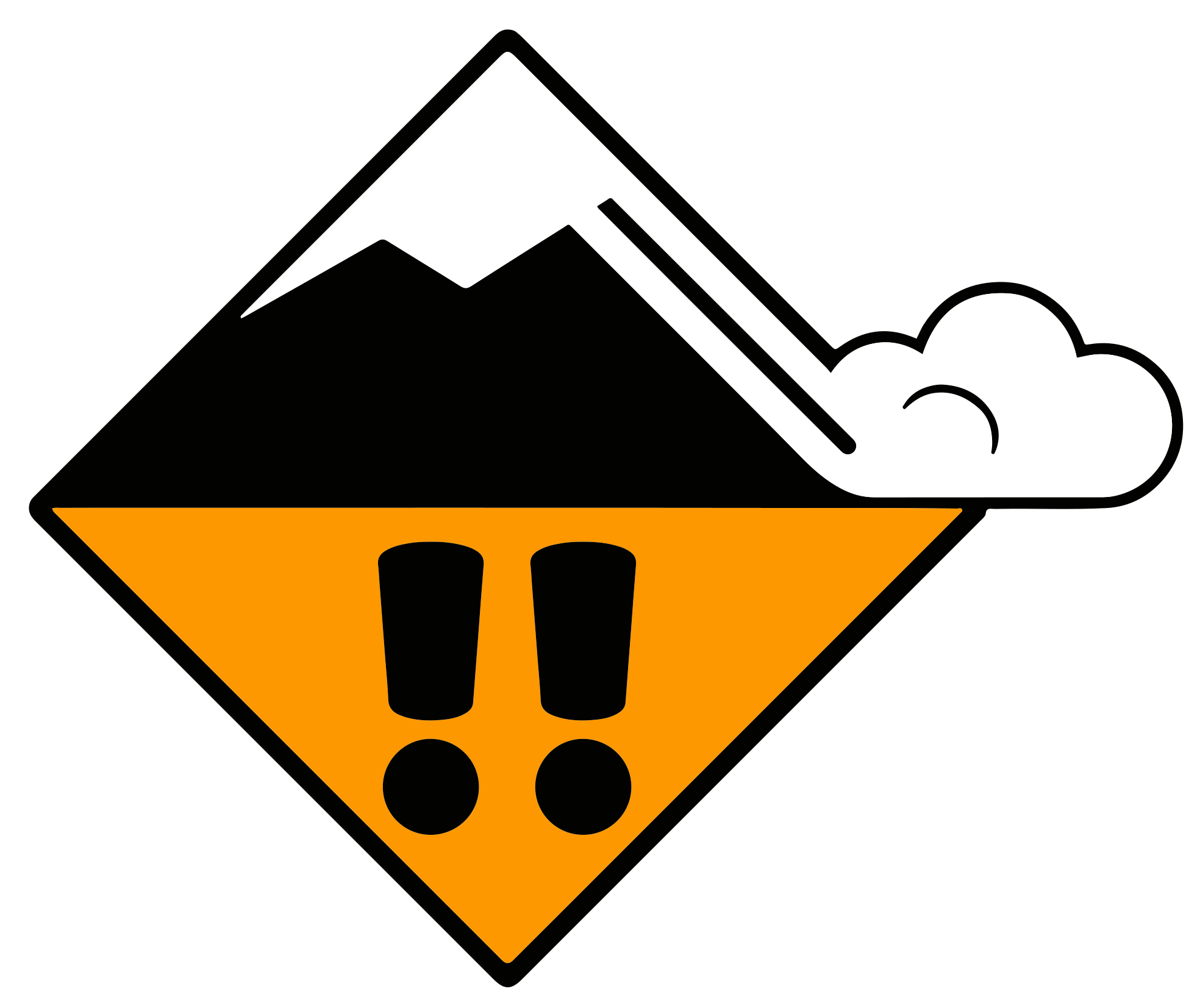 Persistent weak layers
dry
All day
Persistent weak layers
dry
All day
Snowpack & Weather
Snowpack
Last week's fresh and drifted snow is lying on a weak snowpack on the Main Alpine Ridge and south of there and also in the Engadine. In these regions, medium-sized and even large avalanches may still easily be triggered by human activity in the old snowpack in many places. Remotely triggered avalanches are to be expected. Avalanches may also be triggered deeper in the snowpack in southern Valais and in the inneralpine regions of Grisons, especially on northern and eastern slopes. Here, too, some avalanches may become large.
Snowpack structure is somewhat more favourable on the northern flank of the Alps and in northern Valais, but there are weak layers deeper in the snowpack in these regions too. These may still be triggered in some places, especially where there is little snow and at transitions from a deep to shallow snowpack.
Snowdrift accumulations prone to triggering can develop in southerly winds later in the day.
Weather review for Sunday
Conditions were mostly very sunny in the mountains.
Fresh snow
-
Temperature
At midday at 2000 m, around -4°C
Wind
Moderate northerly winds during the night in the south, otherwise mostly light
Weather forecast to Monday
In the west and south, there will be sunny intervals while elsewhere it will be mostly sunny.
Fresh snow
-
Temperature
At midday at 2000 m, between 0°C in the north and -6°C in the south
Wind
Southwesterly winds will rise to moderate to strong at high altitudes over the course of the day
Outlook to Wednesday
On the central part of the Main Alpine Ridge and south of there, there will be often heavy cloud cover on Tuesday and Wednesday, with snow falling down to low altitudes. The largest volumes of snow will fall on the central part of the southern flank of the Alps and from the Lukmanier Pass to the Bernina Pass. By Wednesday afternoon, 20 to 30 cm of fresh snow is expected to have fallen in these regions. There will be a strong southerly wind at high altitudes on Tuesday. Significant persistent weak layers mean that danger level 4 may be reached in these regions despite the modest amount of fresh snow. Naturally triggered avalanches, some large, are expected. The danger exists primarily in alpine snow sports terrain. Avalanches capable of reaching valley bottoms are unlikely.
In the north, there will be sunny intervals on both days with strong to storm-force southerly winds at high altitudes, especially on Tuesday, while there will be a strong foehn wind in the Alpine valleys of the north. The strong winds mean that avalanche risk will increase somewhat in some regions. The avalanche situation remains critical, particularly in the inneralpine regions of Valais and Grisons.
Issued
2 Feb 07:00 UTC
Valid until
2 Feb 16:00 UTC
Next update
2 Feb 16:00 UTC
Adjoining regions
Get avalanche alerts
Enter your email to receive daily bulletin updates for this region.