
Central Grisons and Anterior Rhine
Zervreila
 Sunrise
06:53
19:58
Overcast
Sunrise
06:53
19:58
Overcast

Hard-to-read day. Persistent or gliding-snow problems can mask the real risk.
Day Risk Profile
Avalanche Problems
 Persistent weak layers
dry
All day
Persistent weak layers
dry
All day
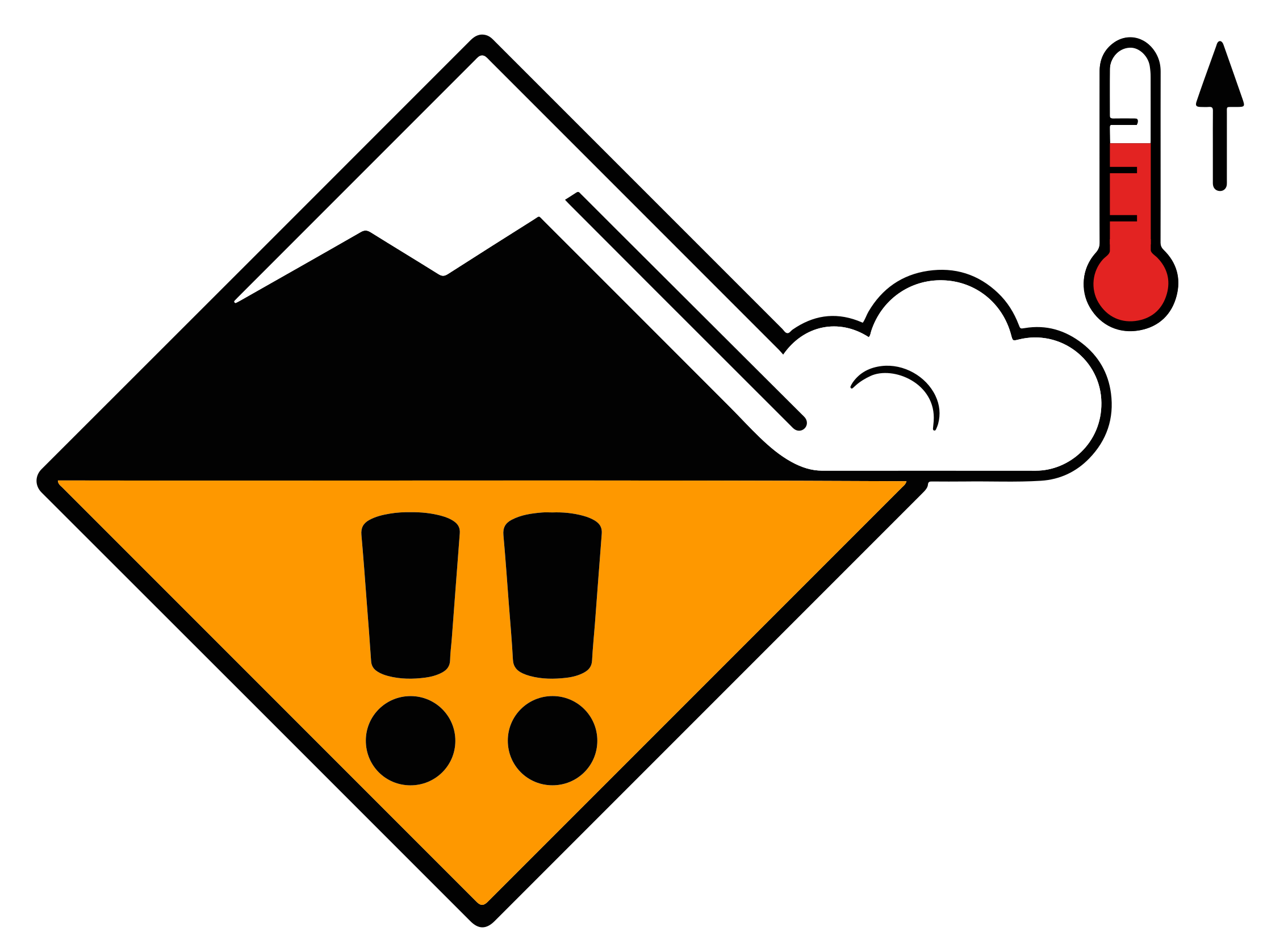 Wet snow
wet
Later
Wet snow
wet
Later
Snowpack & Weather
Snowpack
The old snowpack still contains various weak layers. With the marked warming since Saturday, the likelihood of slab avalanches being triggered in these weak layers has been increasing appreciably over the course of each day. On Saturday and Sunday, natural dry or moist slab avalanches occurred mainly in Grisons and in isolated cases also in southern Valais, predominantly on west-facing slopes, and in isolated cases also on all other exposed slopes above 2200 m. In isolated cases, such avalanches also proved to be triggerable by human activity.
On the northern flank of the Alps, these weak layers are less pronounced. There, as the temperature warms up during the day, numerous gliding avalanches and loose snow avalanches are primarily to be expected. Due to cloudy nights with reduced outgoing longwave radiation and light precipitation, even in the morning there is a danger of avalanches.
Weather review for Sunday
After a mostly clear night, conditions were mostly sunny during the day.
Fresh snow
-
Temperature
At midday at 2000 m, around +8 °C
Wind
Moderate to strong in the north overnight, elsewhere mostly light to moderate
Weather forecast to Monday
The night will be partly cloudy. There may be a little precipitation in the northeast. The snowfall level will be around 2300 m. It will be mostly sunny during the day. On the eastern part of the northern flank of the Alps patchy cloud will continue into the morning.
Fresh snow
Up to 5 cm above 2600 m on the central and eastern parts of the northern flank of the Alps
Temperature
At midday at 2000 m, between +8 °C in the southwest and +4 °C in the northeast
Wind
Moderate westerly in the north and generally at high altitudes during the night, easing during the day
Outlook to Wednesday
On Tuesday and Wednesday, mostly clear nights will be followed by sunny daytime conditions and light winds in all areas. Temperatures will remain very mild, with the zero degree level lying at 3200 to 3400 m.
The danger of dry avalanches will continue to decrease. The danger of wet and gliding avalanches will increase markedly over the course of each day.
Issued
6 Apr 06:00 UTC
Valid until
6 Apr 15:00 UTC
Next update
6 Apr 15:00 UTC
Adjoining regions
Get avalanche alerts
Enter your email to receive daily bulletin updates for this region.