Central Grisons and Anterior Rhine
Zervreila
 Sunrise
08:58
18:10
Overcast
Sunrise
08:58
18:10
Overcast

Hard-to-read day. Persistent or gliding-snow problems can mask the real risk.
Day Risk Profile
Avalanche Problems
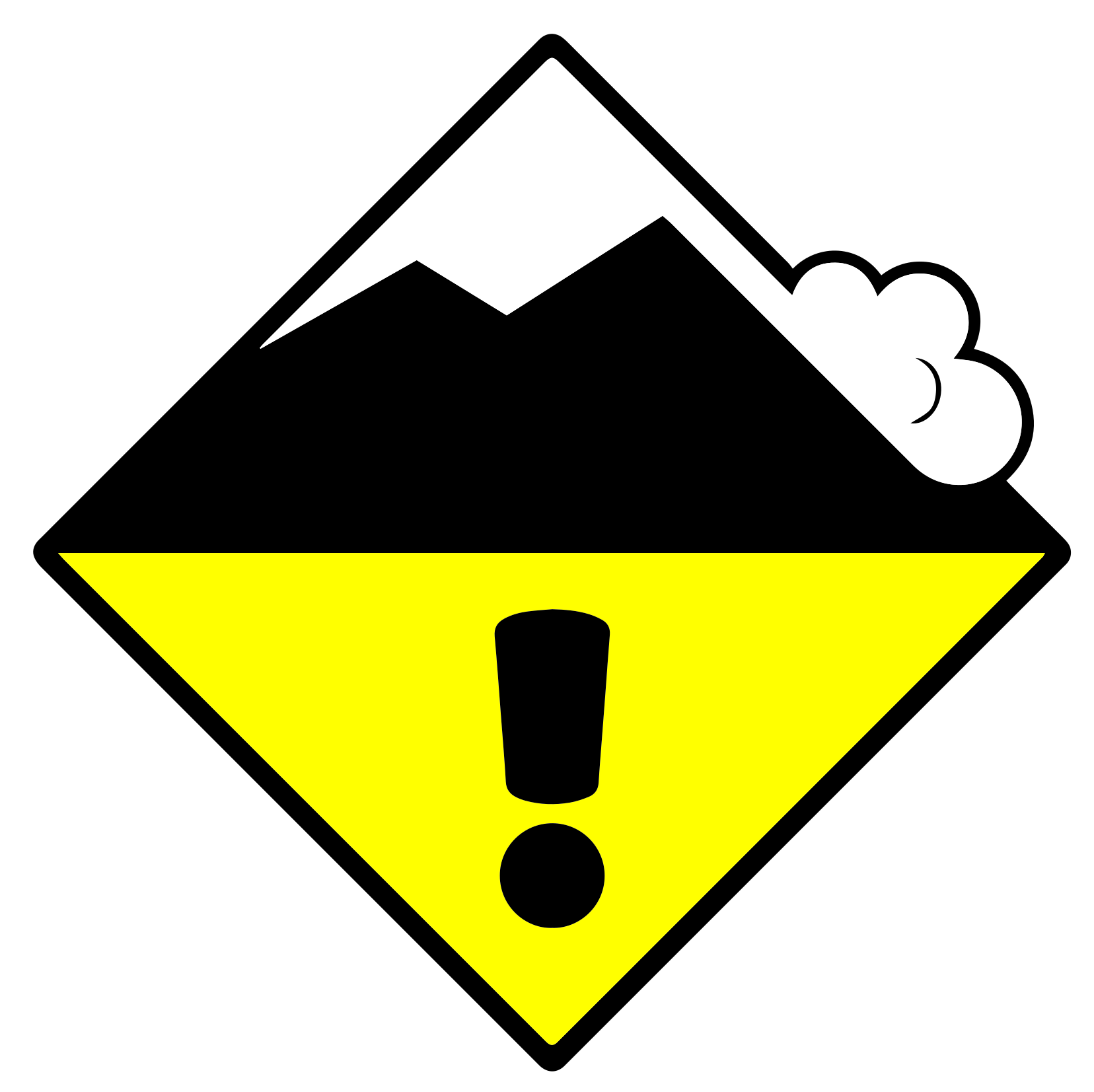 Persistent weak layers
dry
All day
Persistent weak layers
dry
All day
Snowpack & Weather
Snowpack
There are distinct weak layers in the middle and lower part of the snowpack, particularly on wind-protected shady slopes. These are particularly common south of a line from the Rhône to the Rhine and on the southern flank of the Alps. In these weak layers, medium-sized and sometimes even large avalanches can still be triggered by human activity. The snowpack on northern and eastern slopes in Valais, as well as in northern Grisons, is particularly prone to triggering. Remote triggering is still possible in these areas in particular. The most recent avalanches triggered in the old snowpack were reported on the northern flank of the Alps at the weekend.
Weather review for Tuesday
It was cloudy on the southern flank of the Alps. Some snow fell at times above 1000 m. It was sunny in the other regions.
Fresh snow
A few centimetres in the southern Simplon region and in Valle Maggia
Temperature
At midday at 2000 m, between +1 °C in the north and -4 °C in the south
Wind
From the south:
- Moderate and occasionally strong on the northern Alpine ridge
- Elsewhere light to moderate
Weather forecast to Wednesday
Conditions will be sunny in the mountains.
Fresh snow
-
Temperature
At midday at 2000 m, between 0 °C in the north and -4 °C in the south
Wind
Mostly light southwesterly to westerly winds
Outlook to Friday
On Thursday it will be sunny in the east. Clouds will gather in the west and south. On Friday it will be cloudy in the west and south, with precipitation on the Main Alpine Ridge and to the south of it in the afternoon. The snowfall level will be at low altitude. There will be sunny intervals in the east.
The avalanche danger will continue to decrease slowly. Weak layers in the old snowpack will remain prone to triggering, especially in the inneralpine regions.
Issued
21 Jan 07:00 UTC
Valid until
21 Jan 16:00 UTC
Next update
21 Jan 16:00 UTC
Adjoining regions
Get avalanche alerts
Enter your email to receive daily bulletin updates for this region.